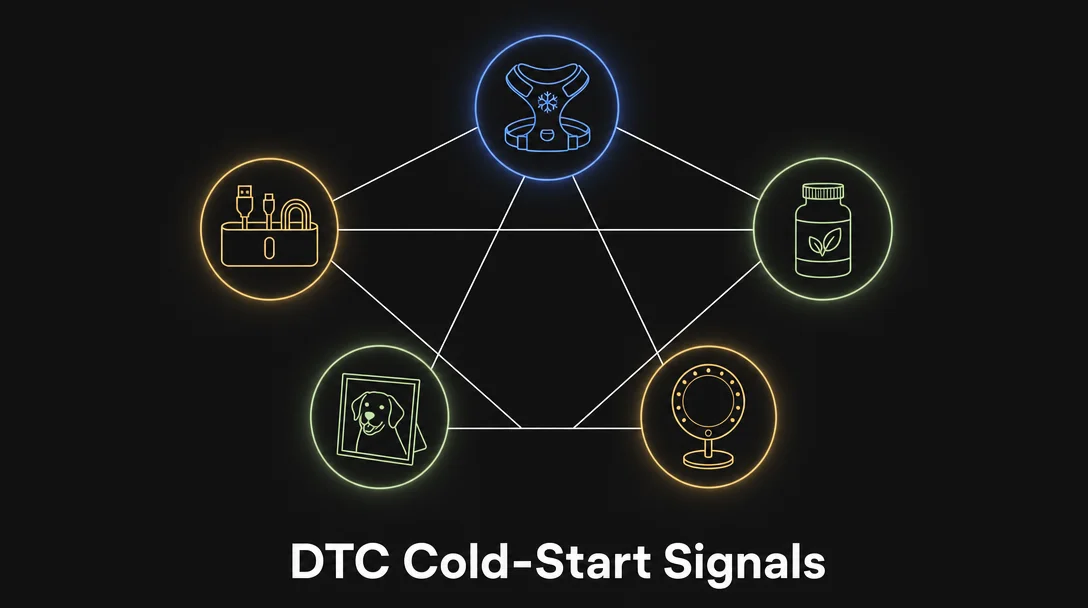
5 cold-start category signals: May 18 – June 1, 2026
A two-week catch-up issue surfacing five niche categories with multi-source demand signals and verified competition gaps: desk cable management bundles, pet cooling products, GLP-1 muscle preservation supplement bundles, personalized pet accessories (print-on-demand), and LED smart vanity mirrors. Prime Day tailwind explicitly called out for time-sensitive categories.

This issue covers two weeks instead of the usual one. The May 25 run was skipped entirely due to an infrastructure outage, so signals from both weeks are combined here. The net effect is more data behind each signal — patterns that appeared once in a normal week appeared twice across this window, which raises confidence on the categories that cleared. Five made the final list.
One structural note before the categories: Amazon Prime Day is confirmed for late June 2026 1, putting the FBA inventory deadline roughly at mid-June — about two weeks from now. For DTC-first sellers on Shopify, the deadline is softer, but the organic traffic lift around Prime Day week raises all boats in adjacent categories. The time-sensitive categories below are marked.
Categories are ordered by cold-start feasibility.
Desk cable management bundles
The signal: ShelfTrend ranks desk cable management as #5 in its Top 10 Emerging Product Categories for 2026, with 24% new SKU listing growth in 90 days and sell-through running 19% above the home office accessories category average. 1 The TikTok signal is sharp: a single organic cable management video by @diemarchive accumulated 540,900 likes and 947 comments during May 2, with no sponsored hashtag. On YouTube, multiple "best cable management 2026" roundups dropped across May — magnetic cable clips from brands like Sinjimoru appeared in three independent comparison videos. 3 Instagram desk setup reels using the "2026 Desk Setup" format are consistently crediting cable management as the most-asked-about accessory in comments. 4
The video that anchored the TikTok signal — 540,900 likes, no paid hashtag, pure organic desk-setup content:
콘텐츠 카드를 불러오는 중…
The retractable cable charging hub is a confirmed sub-category: Anker published a direct comparison of its own 100W vs. 67W vs. power-strip models in May 5, and the JOYROOM PODIX 5-in-1 (140W GaN, retractable USB-C cables, rotating magnetic base) attracted organic YouTube reviews in the same window. 6
Why the gap exists: Amazon's top cable management listings are dominated by OEM white-label brands — CCCEI, VIVO, ARES WING, WISUGASO. 7 Joyroom, often cited by YouTube reviewers, is a Chinese wholesale manufacturer distributed through B2B catalogs with 276 listed SKUs — not a consumer DTC brand. 1 ShelfTrend's own analysis identifies the specific gap: "A complete solution at $25–40 is underserved and aligns with how buyers are actually searching ('cable management bundle for desk')." 1 Most current Amazon listings are single-component (just clips, or just a tray). Twelve South is the only recognizable DTC accessories brand with a cable-specific product in this window — their CableStay USB-C with magnetic dock. 8
The desk organizer market was valued at $3.8 billion in 2025 and is projected to reach $6.1 billion by 2034. 9
Cold-start view: A Shopify bundle combining a cable tray, magnetic clips, a velcro sleeve set, and a label pack at $28–38 directly answers the search intent that ShelfTrend identified. OEM manufacturers producing these components at MOQ under 200 units per SKU are available on Alibaba; the magnetic clip mechanism (as validated by BTOD reviewer Robert Grebe, who called Sinjimoru's clips his "personal favorite of the five" 7) is the hero component that drives organic TikTok and Instagram content. A bundle brand with a clean visual identity and one desk setup video could establish organic rankings within the Prime Day window.
Limiting factor: This category is easy to enter but also easy to commoditize. The DTC angle requires a visual brand identity and genuine bundle logic — not just repackaged OEM clips under a new name. Without content, this reverts to dropshipping margins.
Pet cooling products (⚡ Prime Day window)
The signal: ShelfTrend ranks pet cooling as #2 in its 2026 emerging categories — the second-highest opportunity score in the entire Top 10 report — with 41% listing growth in 60 days and sell-through 33% above the pet accessories category average. 1 26% of pet product sellers flagged pet cooling as their fastest-moving new addition in Q1 2026. Two new DTC entrants launched within this two-week window:
- Wag Trendz NeoCool (May 27, Austin TX): a patent-pending cooling dog harness using passive perforated airflow — no soaking required. Starting at $46 for harnesses. Third-party lab testing claims 2.5× greater airflow than traditional harnesses and 85%+ reduction in heat and moisture retention. 10 Co-founder Michelle Clayton said the brief was to make a harness "lightweight, breathable, supportive, and comfortable enough for everyday adventures while still helping dogs stay cooler naturally." 10 Sold DTC via Shopify; not yet on Amazon.
- Luciphia Premium Cooling Mat (May 20): passive cooling, no electricity or freezing, machine-washable, available in multiple sizes on Amazon. 11
TikTok Shop is converting well on demo videos showing dogs visibly relaxing on cooling mats. ShelfTrend sets the entry window at 1–3 months — which overlaps directly with Prime Day. 1
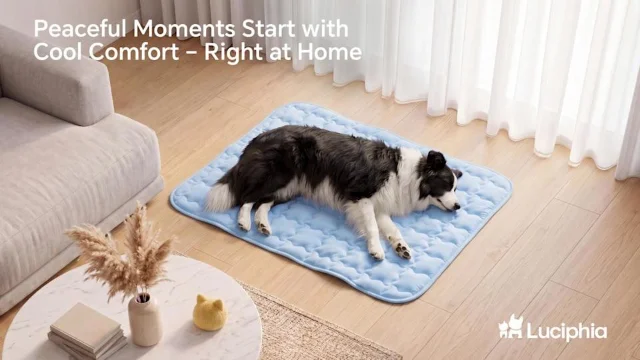
Why the gap exists: The market is fragmented but not dominated. Active Amazon brands include Spark Paws (fashion-forward positioning), Vagascape (ice-pack design), furrybaby (OEKO-TEX certified), and Arf Pets (QVC presence) — but none holds a clear #1. ShelfTrend notes that buyers are asking "how many hours does it stay cool?" in product Q&As, and sellers who answer this question in their listings are winning the click. 1 The two signals driving demand are structural: 2025 was the hottest year on record (creating pre-purchase behavior for 2026), and the pet humanization trend is extending premium wellness logic to dogs and cats.
The Reddit dropshipping community identified "premium pet accessories with an interior design angle" as "a genuinely underserved niche" this week. 12
Cold-start view: The clearest opening is a mid-tier kit bundle (cooling mat + portable water bowl + cooling bandana, $38–55 total) with size-specific variants and a verified cooling duration spec front-and-center in the listing. Sourcing: Chinese manufacturers producing passive cooling pad materials (pressure-activated gel or breathable mesh) with MOQ 100–200 units. At $40–50 retail, margin is workable. The Wag Trendz NeoCool launch proves a premium harness at $46 is viable DTC; the mat/kit tier is the faster entry point with lower development friction.
Watch for: Prime Day is approximately 3.5 weeks away. This is the highest-urgency category in this issue.
GLP-1 muscle preservation supplement bundle
The signal: As of June 1, 2026, zero DTC brands have launched a dedicated creatine + leucine bundle explicitly positioned for GLP-1 drug users. 13 14 The gap confirmed in the May 15 scan remains completely open two weeks later.
The awareness backdrop has intensified: Barbell Medicine published a comprehensive evidence review (updated May 13, 2026) showing that roughly 38–39% of weight loss in the STEP-1 semaglutide trial registered as "lean mass" on DXA body-composition scans 13; Men's Journal published an expert guide on May 19 explicitly recommending creatine monohydrate 5g daily and leucine threshold 2.5–3g per meal for GLP-1 users 15; and ConsumerLab released a "Supplements to Take or Avoid When Using a GLP-1 Drug" guide in May 2026. 16
The addressable market grew again this month: Eli Lilly's Foundayo (orforglipron), the first oral GLP-1 pill, received FDA approval earlier in spring 2026, expanding the GLP-1 user base beyond those willing to self-inject. 15
Why the gap exists: The GLP-1 supplement market is crowded around weight-loss amplification (berberine, fiber, satiety aids). Casa de Sante — the closest existing brand, founded by an MD PhD — explicitly recommends creatine and leucine on its blog 14 but sells them as separate SKUs. No brand has assembled the creatine + leucine + electrolyte stack into a single "GLP-1 muscle preservation" SKU with that positioning. Reddit communities (r/Semaglutide, r/glp1) show users asking about creatine and protein supplements individually — there's no brand they consistently name. 17
Cold-start view: Private-label creatine monohydrate, leucine powder, and electrolyte blends are available from US and Chinese supplement contract manufacturers at MOQ under 500 units. FDA and FTC compliance requires positioning as "muscle support during caloric restriction" — avoiding claims that directly reference GLP-1 drugs by name. This is achievable with standard supplement copy practice. Estimated retail: $35–55 for a 30-day supply. Margins are competitive with the supplement category (3–5× COGS). The organic content angle writes itself: before/after body composition photos, educational posts about lean mass vs. fat loss, and commentary from dietitians are all driving engagement in the GLP-1 fitness community now.
Watch for: This is a 6–12 month window before established supplement brands (Momentous, Thorne, Athletic Greens) build dedicated GLP-1 muscle lines. The oral pill expansion is the demand catalyst; the gap in dedicated DTC positioning is confirmed.
Personalized pet accessories (print-on-demand)
The signal: TrendTrack recorded 3,398,000 seven-day ad impressions for personalized pet accessories across active Shopify campaigns in the week ending May 27 — the single strongest reach signal in TrendTrack's entire Summer 2026 dataset. 18 TrendTrack co-founder Bixente noted: "With +3,398,000 impressions in seven days, personalized pet accessories generated the single strongest reach signal in our entire Summer 2026 dataset." 18 Pet-related products appeared in three of the last four AliDropship weekly bestseller lists (Multi-Level Cat Tree, Luxury Cat Cage, Adjustable Cat Tree Tower). 19
The macro context supports this: US cat ownership rose 23% to 49 million households, per SupplyKick; pet vitamin spending is up 56% for dogs and 70% for cats vs. 2018. 20
Why the gap exists: Print-on-demand pet accessories (photo cushions, tote bags, phone cases, hats, blankets featuring customers' pet photos) carry zero inventory risk — the POD model produces only what's ordered. The emotional purchase driver — displaying your specific pet's face — is harder to commoditize than standard pet gear because no two products are identical. Instagram posts tagged #winningproducts showed pet accessories generating 900+ likes in this window.
The Reddit dropshipping community separately confirmed the premium pet accessories angle as "a genuinely underserved niche" with an interior design angle. 12
Cold-start view: This is the lowest-barrier category in this issue. A Shopify store connected to Printify or Printful, a mockup generator, and pet photo upload functionality can launch in a weekend. The risk is not execution — it's differentiation. The impression data confirms many sellers are already running ads. The cold-start angle that works is a defined aesthetic niche (e.g., "minimalist Scandinavian-style pet portrait prints" or "vintage botanical style pet gifts") that stands out from the generic photo-on-cushion default. A focused product range of 3–5 SKUs with consistent visual identity converts better than a broad catalog.
Limiting factor: Extremely low barrier means high entrant volume. Differentiation through aesthetic and brand voice is the only sustainable moat here.
LED smart vanity mirrors
The signal: LED smart vanity mirrors appeared in three of the last four AliDropship weekly bestseller lists across May and early June: "Modern LED Smart Mirror" (May 27), "Smart LED Mirror" and "18-Inch Lighted Vanity Mirror" (May 6). 19 AliDropship's editorial copy describes the product as one that "transforms any bathroom into a spa-worthy space that home décor shoppers actively search for." 19
The structural case is a convergence of two Amazon growth vectors: Beauty & Personal Care is up 7% year-over-year, with online beauty growing 9× faster than in-store; Home & Kitchen bedroom furniture grew 28% YoY. 20 LED vanity mirrors sit directly at the intersection. CJ Dropshipping's June 2026 product picks included a "Levitation Photo Frame Lamp" — a related aesthetic illuminated home product — suggesting broader demand for decorative light-integrated home items. 21
Why the gap exists: The category spans a wide price range ($30–$300+), but the mid-tier DTC-branded segment ($60–120) lacks a recognizable brand with a defined aesthetic identity. Most Amazon listings in this range are generic Chinese OEM products with interchangeable photography and identical product titles. The content format for this category plays well on Instagram and YouTube — the "bathroom transformation" or "getting ready routine" format is evergreen and drives strong organic discovery.
Cold-start view: Sourcing LED vanity mirrors with warm-light backlit frames and smart features (touch dimmer, color temperature adjustment) from Alibaba suppliers at MOQ 50–100 units is straightforward. At $75–110 retail DTC, margins support a customer acquisition cost of $15–25 on Meta. The brand angle that works is a clear aesthetic positioning (minimalist / warm-neutral / Japandi) paired with a creator-first content strategy. A single well-lit "morning routine" video from one micro-influencer in the home décor space can drive weeks of organic traffic.
Watch for: CJ Dropshipping and AliDropship both use their weekly lists as leading indicators — products appearing 3+ weeks consecutively are typically moving from discovery to scaling. LED mirrors have cleared that bar.
This issue's selection criteria
Categories in this list met at least three of the following conditions: demand velocity evidence from two or more independent sources (search spikes, social engagement, ad impression data, marketplace listing growth), a verifiable competition gap (no dominant brand with more than a few hundred reviews, or an identified price-tier gap), confirmed cold-start feasibility (accessible MOQ, workable margin structure, no significant regulatory barrier), and a clear content format that works organically on TikTok, YouTube, or Instagram.
Categories with strong signals that did not make the list: amphibious water shoes (820,000 weekly TikTok ad impressions 18, but competition from Wirecutter-validated brands is harder to displace); Montessori children's furniture (repeated AliDropship signals 19, but high-ticket furniture requires stronger after-sales support than most solo operators can manage at launch); portable personal cooling mid-tier ($35–65 gap confirmed again — Shark ChillPill at $150 and Dyson HushJet at $100 both entered this window and Wirecutter rated neither as recommended 22, but the seasonal urgency is real and the gap is open if you have a defined audience story). HAP remineralizing gum was covered in the May 12–18 issue and is not repeated here — the category has expanded to 8+ active DTC brands as of June 1 23, which moves it from early-signal to visible competition.
Scoring method: demand velocity (search / social growth, ad impression data), competition density (marketplace listing saturation, dominant brand presence), and cold-start feasibility (regulatory path, MOQ, margin). No paywall data was used — all sources are publicly accessible.
참고 출처
- 1Amazon Prime Day 2026 date confirmed — ShelfTrend
- 2@diemarchive cable management video — TikTok
- 3CableTech — Best Cable Clips for Desk Setup Review
- 4@jodie.thedesigntwins charging station reel — Instagram
- 5Anker — Best Desk Charging Station in 2026 — YouTube
- 6JOYROOM PODIX 5-in-1 USB-C Charging Station review — YouTube
- 7BTOD — I Bought 5 Top Reviewed Cable Management Products from Amazon
- 8Gear Patrol — Best New Gadgets May 2026
- 9DataIntelo — Desk Organizer Market Research Report 2034
- 10Yahoo Finance — Wag Trendz Launches NeoCool cooling dog harness
- 11Yahoo Finance — Luciphia Launches Cooling Mat
- 12Reddit r/dropshipping — premium pet accessories thread
- 13Barbell Medicine — GLP-1s and Muscle Loss: What the Evidence Shows
- 14Casa de Sante — GLP-1 Muscle Loss Prevention
- 15Men's Journal — How to Prevent Muscle Loss on GLP-1s: Expert Guide
- 16ConsumerLab — Supplements to Take or Avoid When Using a GLP-1 Drug
- 17Reddit r/Semaglutide and r/glp1 community discussion
- 18TrendTrack — Top Trending Dropshipping Products Summer 2026
- 19AliDropship — Best Dropshipping Products To Sell Now
- 20SupplyKick — Fastest-Growing Amazon Categories to Watch in 2026
- 21CJ Dropshipping — Best 7 Shopify Products for June 2026 — YouTube
- 22NYT Wirecutter — Shark ChillPill vs. Dyson HushJet review
- 23Scandi Gum product page
이 콘텐츠를 둘러싼 관점이나 맥락을 계속 보강해 보세요.